
Best matcha powder in Singapore 2026
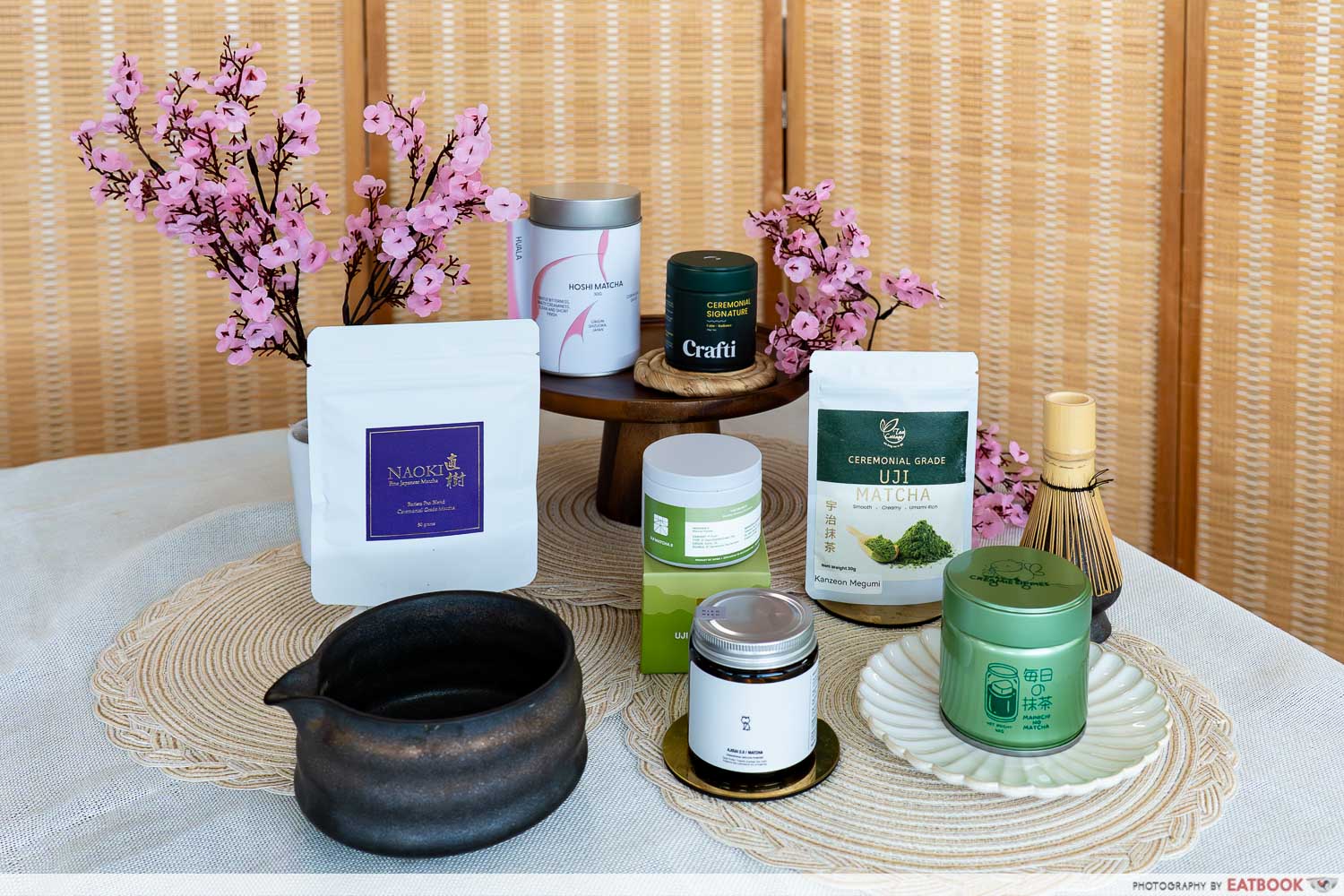
Since this article first came out in 2022, the matcha hype hasn’t just stuck around, but has only gotten more intense. I wasn’t much of a fan back then, but somewhere along the way, I became a matcha girlie myself, having visited at least 100 matcha cafes over the past two years alone.
Our last ranking focused mainly on barista-grade matcha, and this time my editor approved a whopping $200 budget for me to redo the whole listicle with ceremonial-grade matcha instead. Naturally, I was thrilled, though also mildly terrified of how much caffeine I was about to consume.
After whisking through seven cups of matcha, straight and in lattes, here are the best matcha powder brands in Singapore, including ones you can buy both in-store and online.
10 Best Matcha Cafes In Singapore Ranked—Hvala, Tsujiri And More
The criteria
Before we delve into the rankings, let’s take a closer look at what makes “good” matcha. While matcha powder is made from green tea leaves, special cultivation processes distinguish matcha from regular green tea. Crucial steps such as shading the tea leaves pre-harvest, or grinding the leaves at a slower rate, help produce matcha’s characteristic traits.
For this article, I’ve narrowed down three categories that’ll help us decide on the best matcha powder in Singapore.
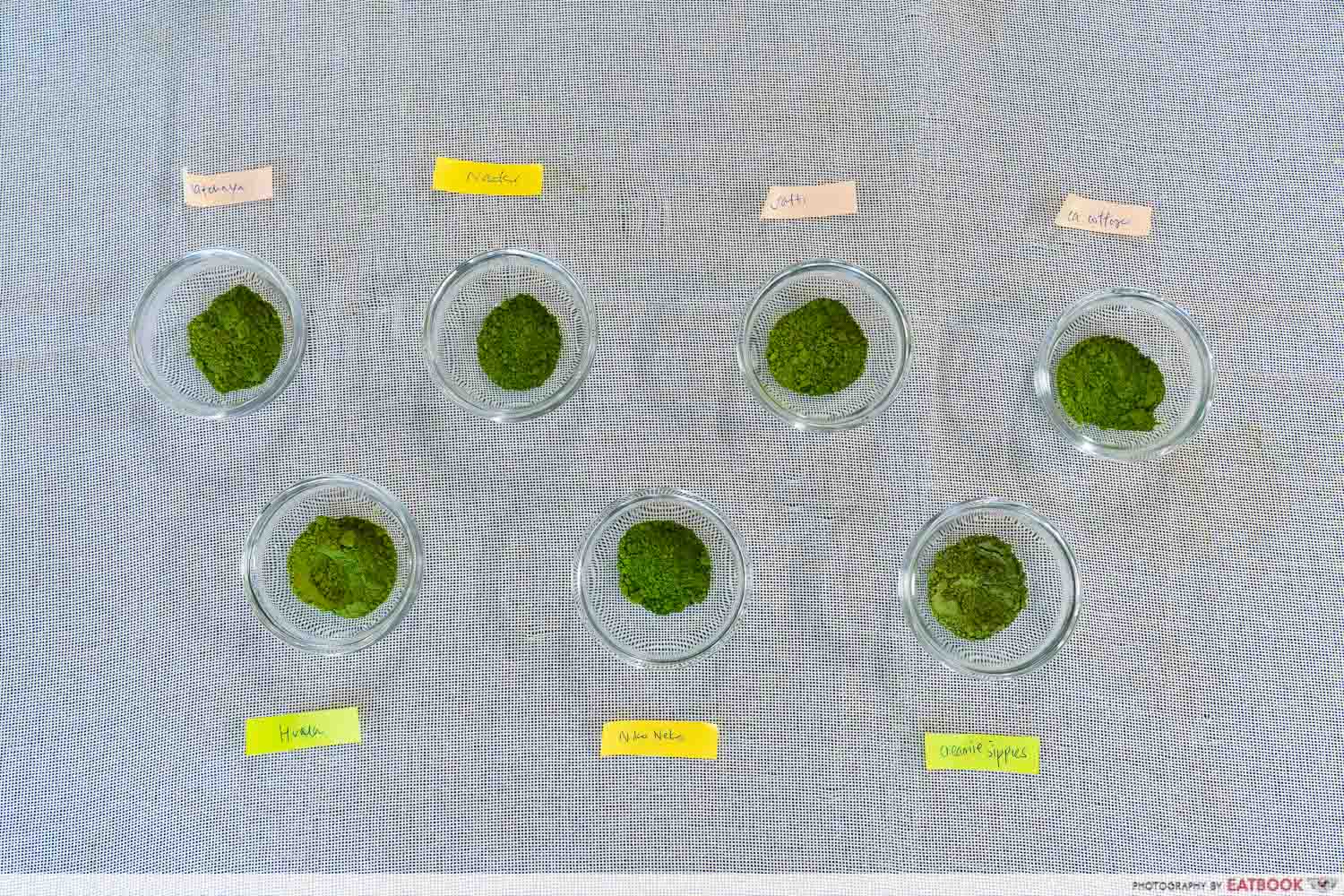
Appearance: The powder’s colour and texture are the first indicators of its freshness and production quality. A vibrant green hue and smooth texture are ideal. Yellowish or brownish tones and coarse textures, on the other hand, might suggest that the powder was made with filler materials, lower-quality leaves, or that it’s gone stale.
Taste: Likewise, the taste of the matcha should be well-balanced and subtly astringent without being overpoweringly bitter. It should also have a smooth mouthfeel free from graininess.
Value: How much does it cost per gram of matcha powder? Does its price point match up to its quality?
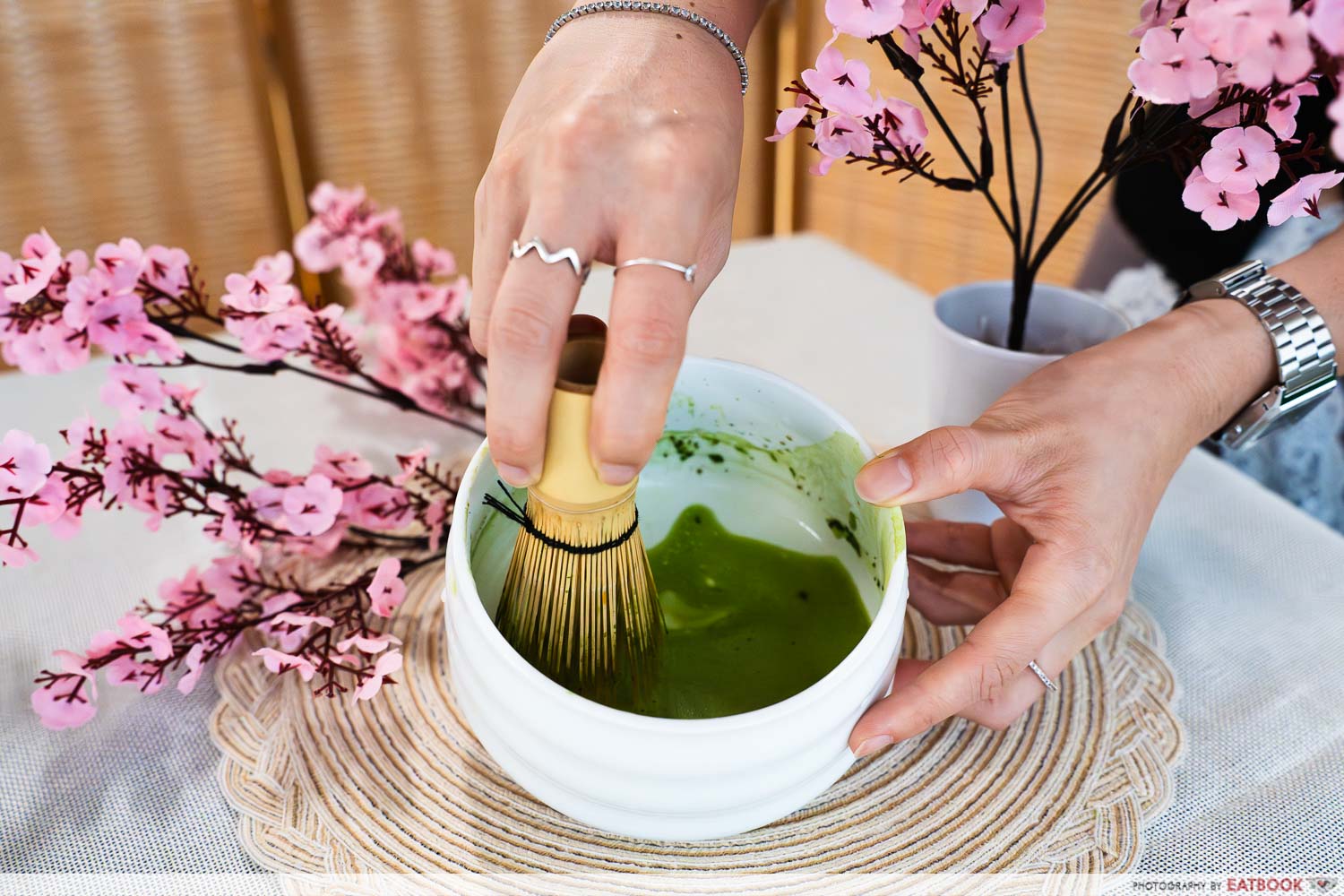
Each powder was used to prepare both a tea and a latte to assess how their flavour profiles might vary in different contexts. Additionally, to ensure fairness, we’ve standardised the preparation method across all powders, making sure to use a fixed powder-to-water ratio, heating the water to the same temperature, as well as using only Farmhouse Fresh Milk when making lattes.
7. Creamie Sippies
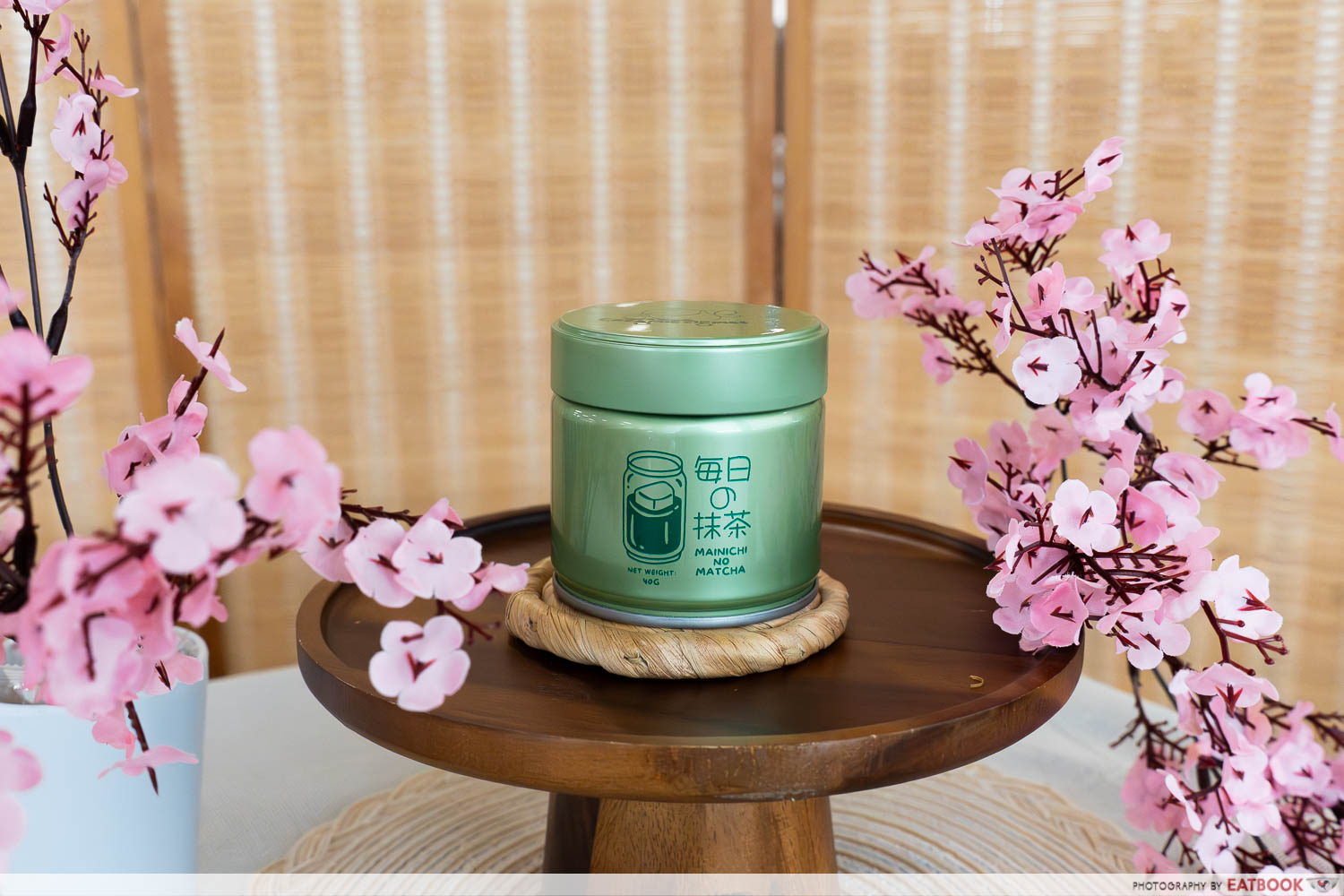
My first brush with Creamie Sippies came early last year, when I stumbled into their Jalan Bukit Merah cafe and fell hard for their banana pudding matcha latte. They’ve since expanded to Keong Saik and Jewel Changi, riding that same wave of popularity into their own matcha powder line, including the Mainichi No Matcha, available online and in-store. It’s a ceremonial-grade Uji matcha with a smooth, creamy texture and none of the grassy bitterness that plagues lesser powders.
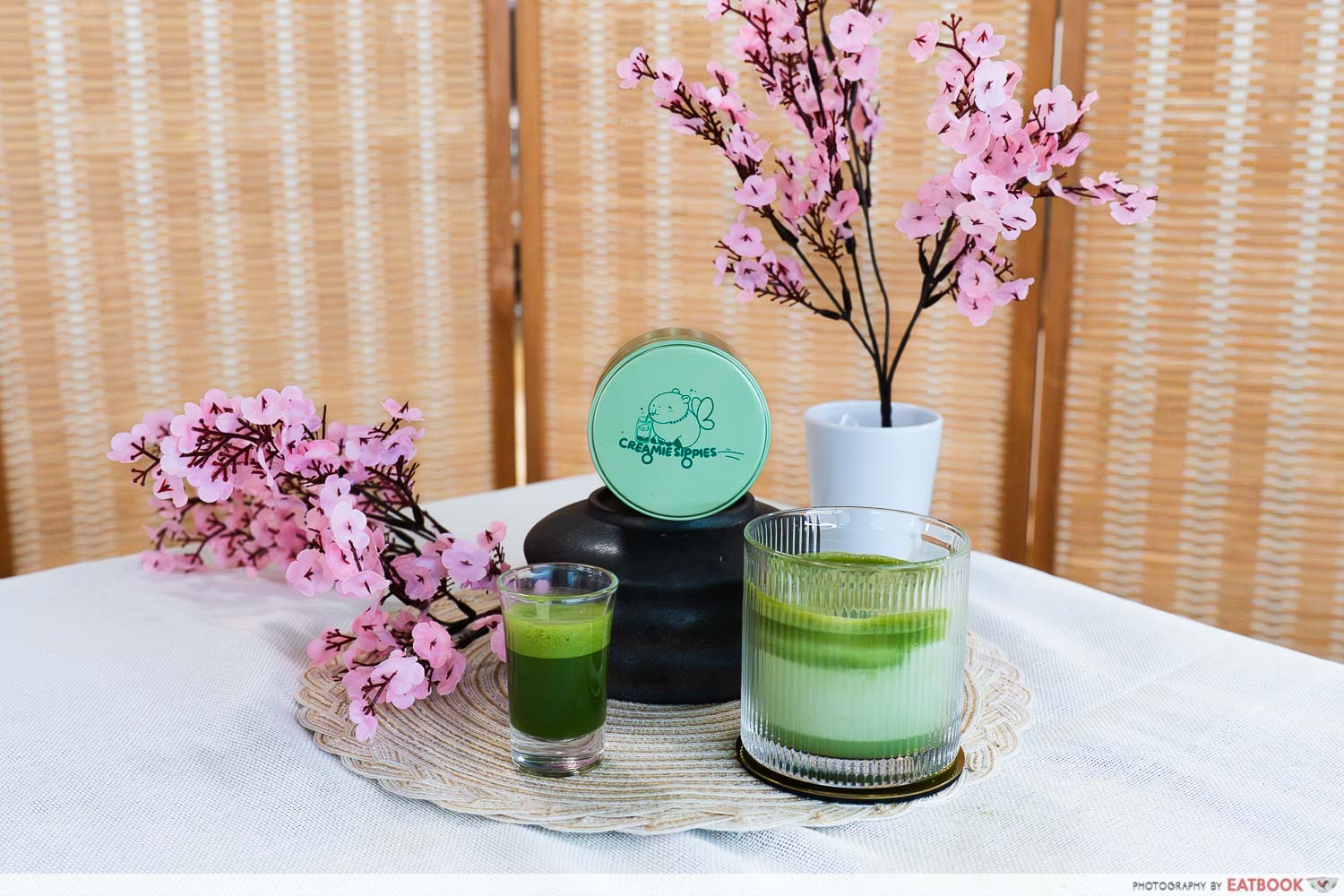
In a latte, the “creamy” and “smooth” claims held up, and I could discern subtle, sweet floral notes. Taken straight, though, the matcha tasted overwhelmingly seaweed-forward, far more vegetal and astringent than the packaging lets on.
The powder didn’t help its case either, coming in as the palest and least vibrant of the bunch. It featured a muted army green rather than the vivid green hue I’d hope for from a ceremonial-grade matcha. It did smell fragrant straight out of the can, though. Plus, at $39.90 for 40g, it’s not exactly a steal either, as it works out to $1 per gram.
That said, none of this makes it a bad matcha. It simply landed at the bottom of the pack compared to the other six we tried, as you’ll see further down this list.
Taste: 6/10
Value: 8/10
Appearance: 7/10
Total: 70%
Website
Creamie Sippies is not halal-certified.
6. Matchaya
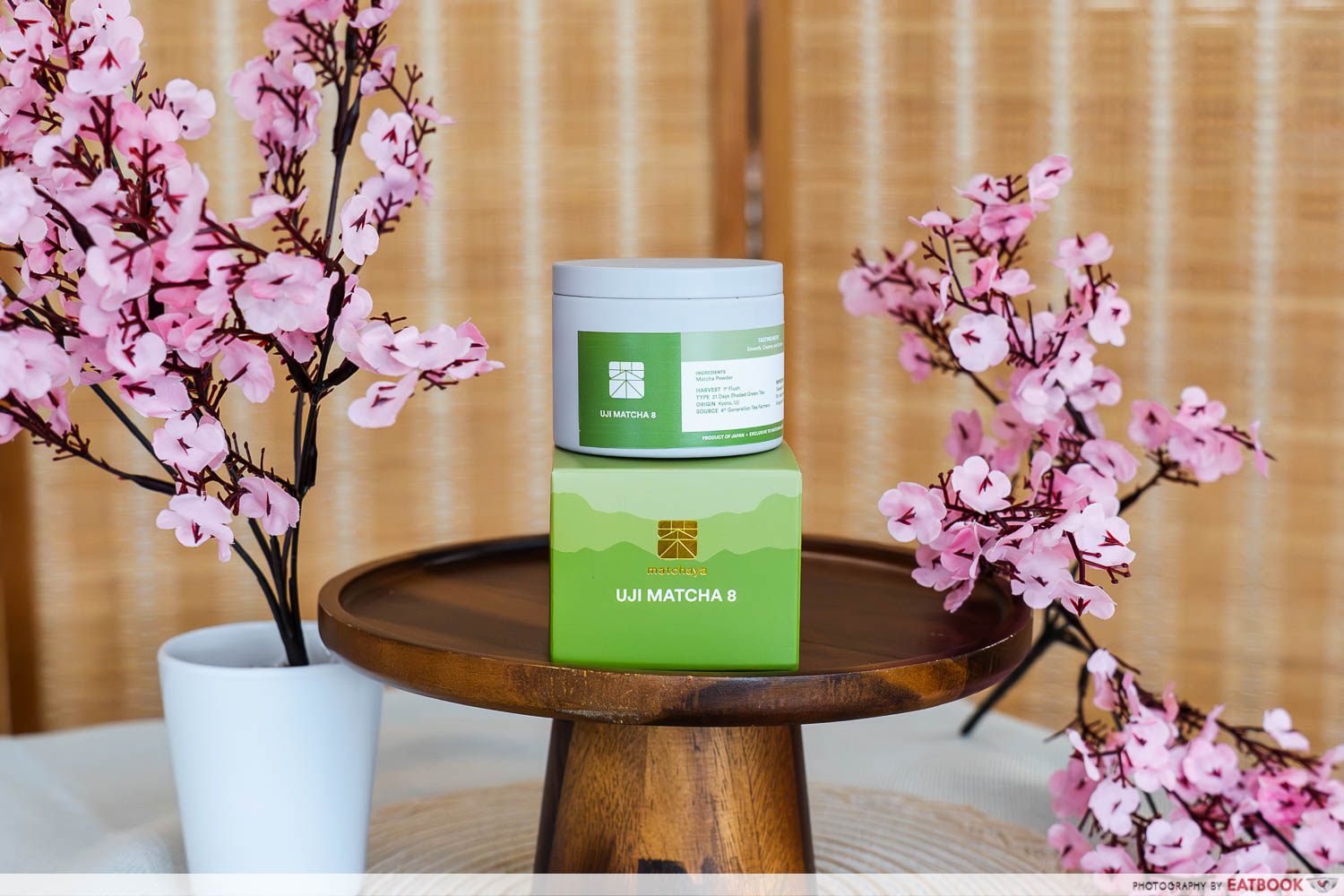
Matcha lovers would be no stranger to Matchaya, but for the uninitiated, the homegrown brand sources its matcha from Uji, Kyoto, grown by fourth-generation tea farmers using the Okumidori cultivar, harvested in the first spring flush. Matchaya’s matcha powder can be purchased in-store at their cafes or online via their website.
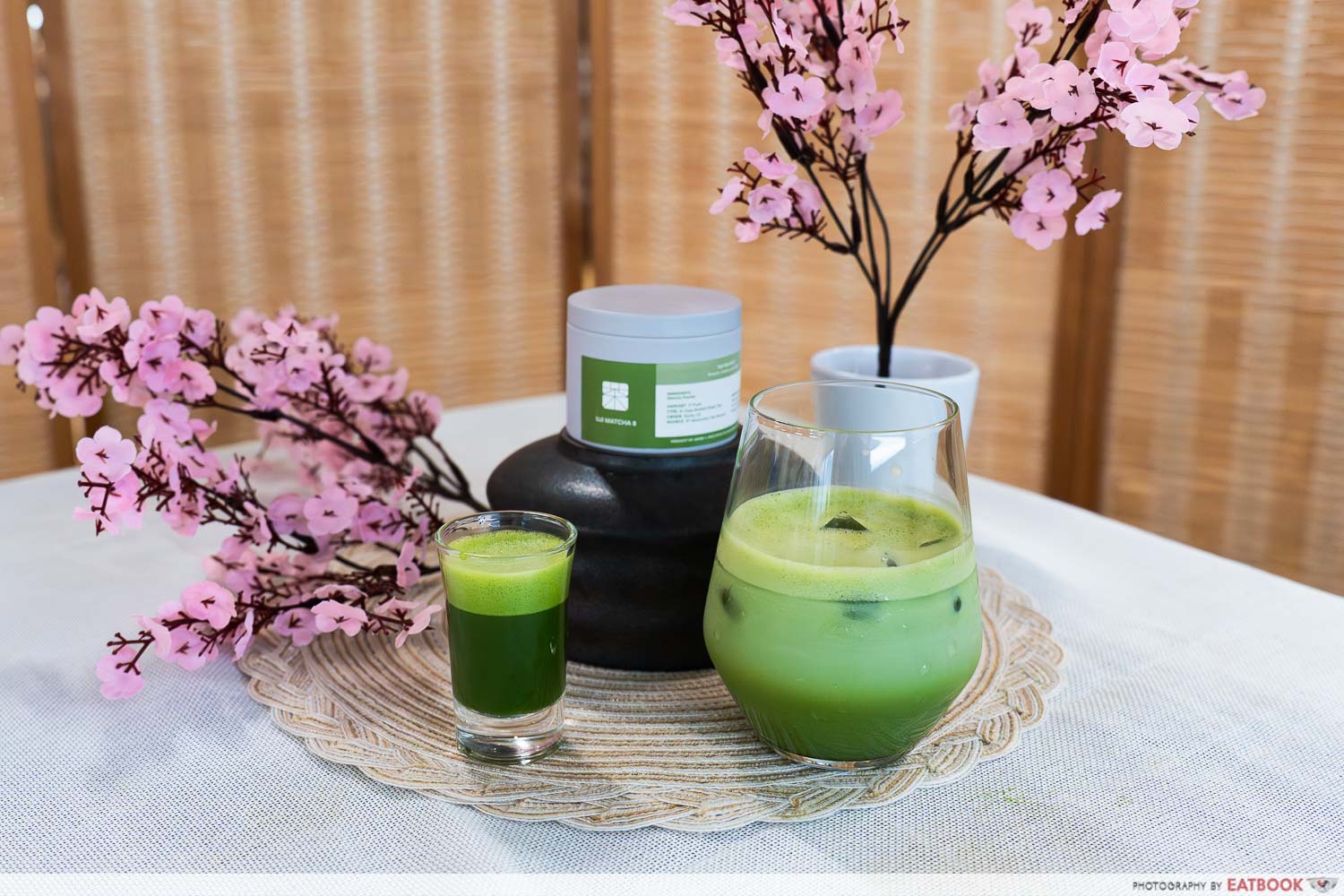
We went with the Ceremonial Matcha 8 Powder ($30.42/30g), which works out to roughly $1.01 per gram. The powder itself wasn’t especially strong-smelling, but what aroma there was came across as fresh rather than stale or overly grassy. As a latte, it was smooth, creamy, and, according to my colleague, “easy to enjoy”, with umami notes coming through nicely. Taken straight, though, it turned bitter, but without that sharp, astringent bite, more reminiscent of bitter gourd juice, with a lingering aftertaste.
Overall, it was a solid, reliable middle-of-the-pack option, but I much prefer it as a latte.
Taste: 7/10
Value: 7/10
Appearance: 7/10
Total: 70%
Website
Matchaya is not halal-certified.
5. Crafti
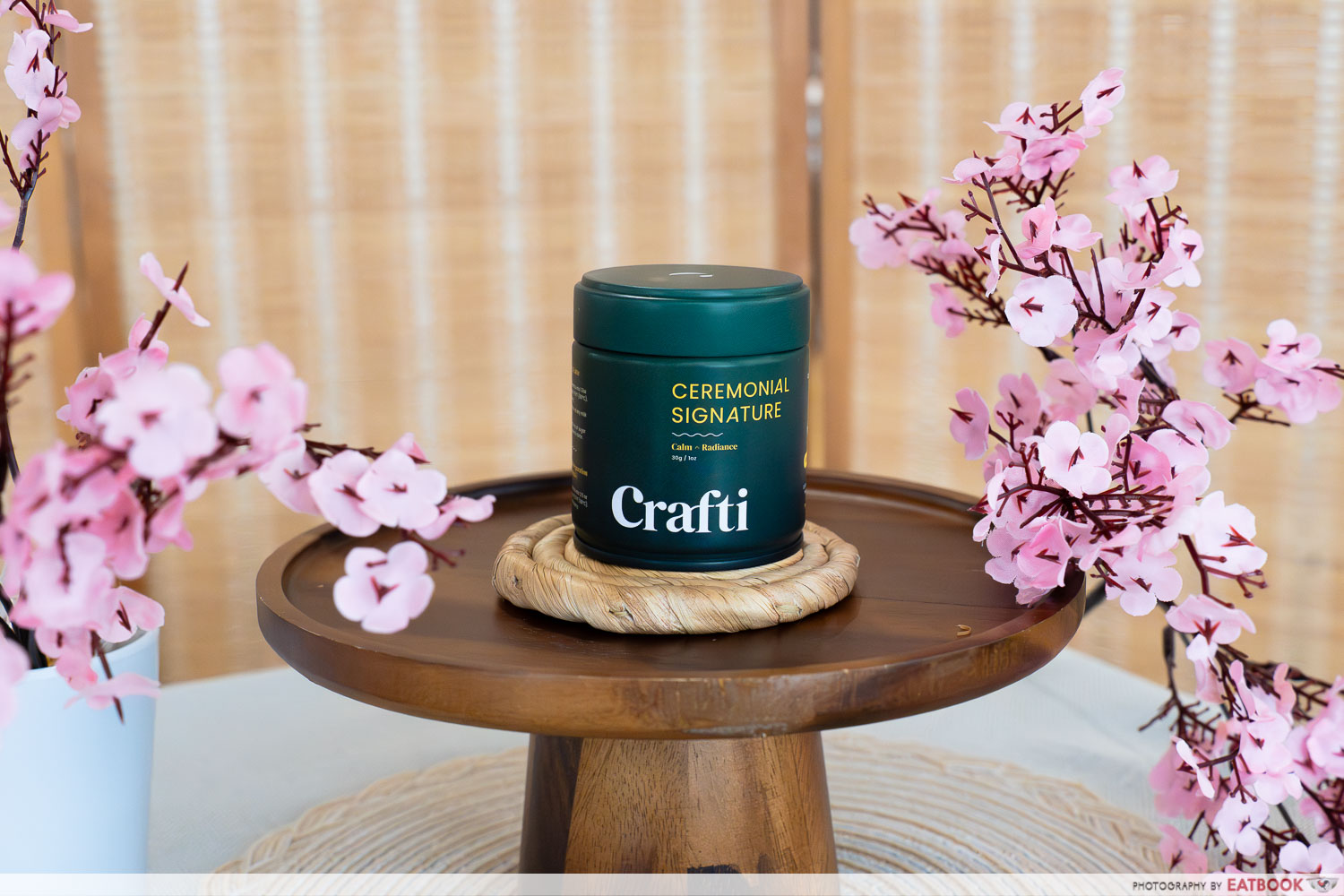
You may have seen Crafti‘s ads on Instagram; that’s actually how I first heard of them. Turns out I wasn’t the only one noticing; one of my gym friends signed up for their subscription and swears it’s helped her matcha journey along. Crafti’s Ceremonial Signature ($24.95/30g) uses first-harvest matcha from Uji, Kyoto, skipping second-flush leaves entirely. That works out to roughly $0.83 per gram, making it one of the more affordable options on this list.
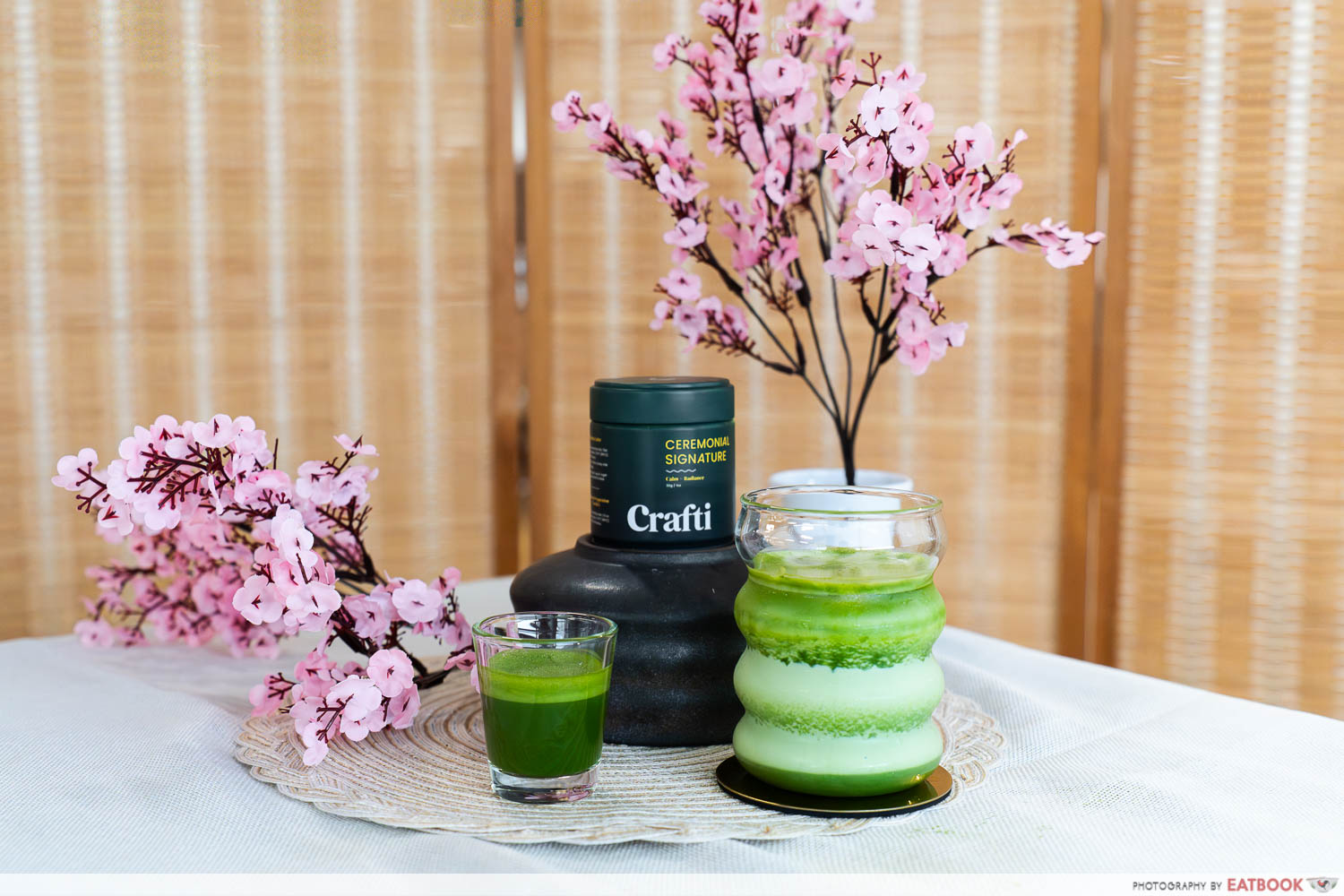
As I cracked open the can, I was hit with an impressively fragrant, earthy nuttiness. Unfortunately, it didn’t carry through into the actual flavour. As a latte, the matcha was beginner-friendly and not overpowering, and its smooth, savoury finish had me gulping it down within minutes. Taken straight, though, it turned notably astringent, though diluting it a little did help take the edge off.
The colour also fell short, landing closer to a pale green rather than a bright hue. It does at least come in as one of the more affordable options here, and works well if you’re after an easy-to-drink matcha that isn’t overly intense.
Taste: 6.5/10
Value: 9/10
Appearance: 6/10
Total: 71.7%
Website
Crafti is not halal-certified.
4. Tea Cottage
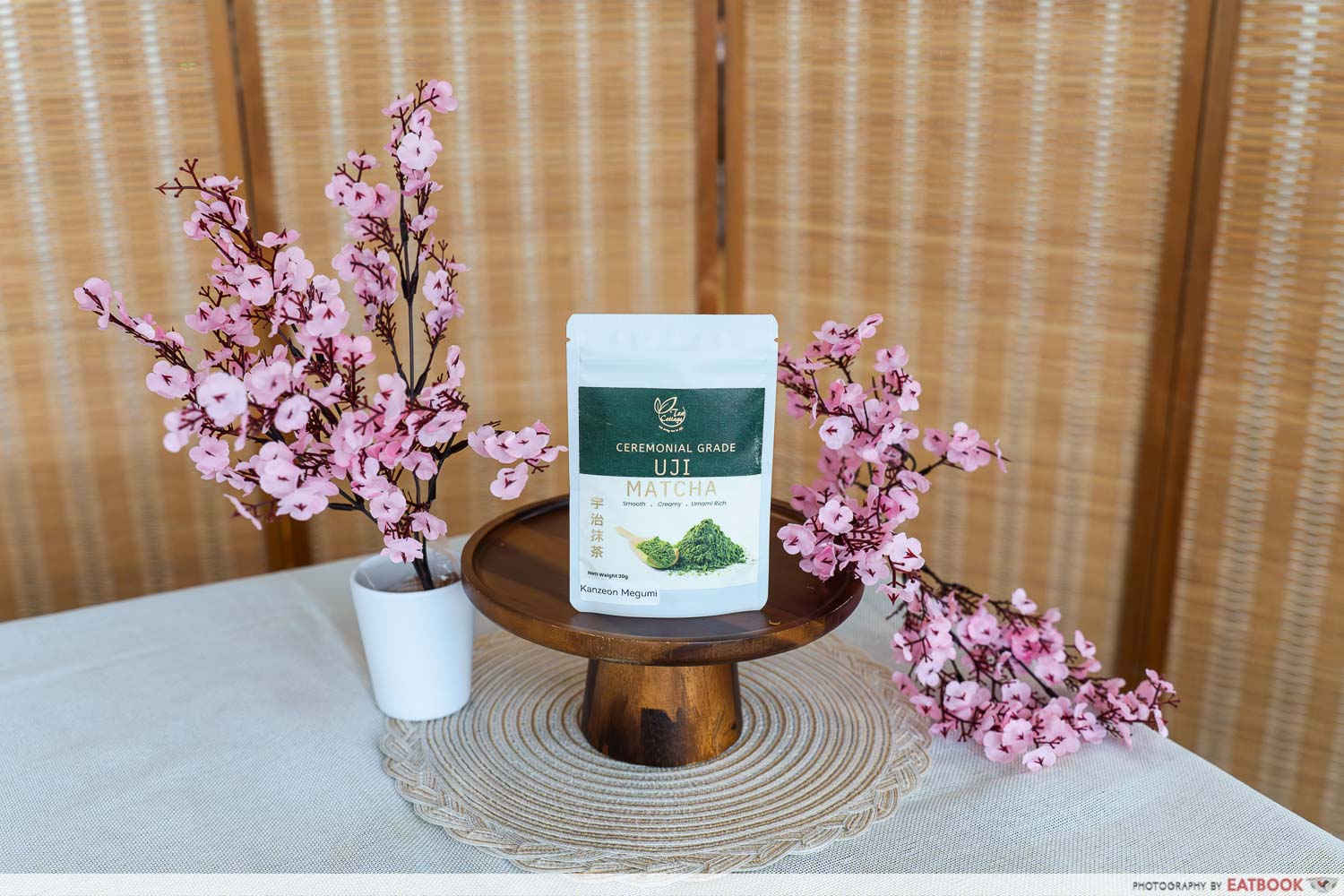
Some people may be familiar with Ichigo, but fewer know it’s actually run by the folks behind Tea Cottage, a Singapore-based Japanese tea supplier that’s been sourcing ceremonial matcha and first-spring teas from Uji since 2012. I’ve been a fan of Tea Cottage for a while now and have gone through most of their ceremonial matcha lineup, but my favourite, and also their bestseller, is the Kanzeon Megumi. At $29.80 per 30g, it works out to roughly $0.99 per gram. It hails from Uji, Kyoto, and comes with a vibrant green powder, at least on paper. You can grab it on Shopee.
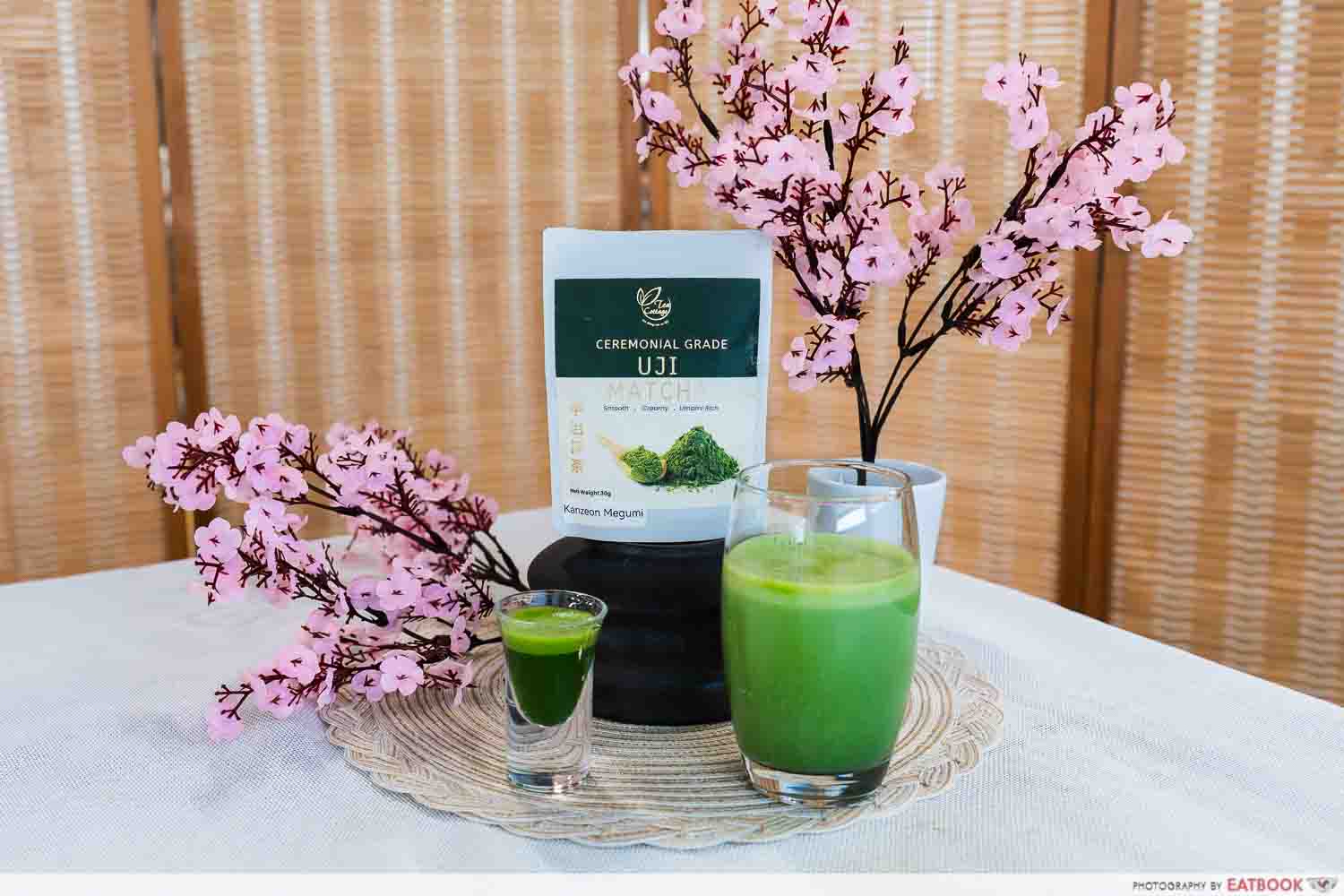
In a latte, it came through umami-forward with virtually no bitterness, easy sweetness, and a faint vegetal, nutty backdrop, making it a genuinely good option for matcha beginners easing into the flavour. Taken straight, the seaweed character was much more pronounced, and while there was still some bitterness, it registered as the least bitter of the straight tastings we did, with the aftertaste fading quickly rather than lingering.
The powder colour, however, wasn’t quite as vibrant as the brand suggests, holding it back slightly on appearance.
Taste: 8.5/10
Value: 8/10
Appearance: 6/10
Total: 75%
Website
Tea Cottage is not halal-certified.
3. Hvala
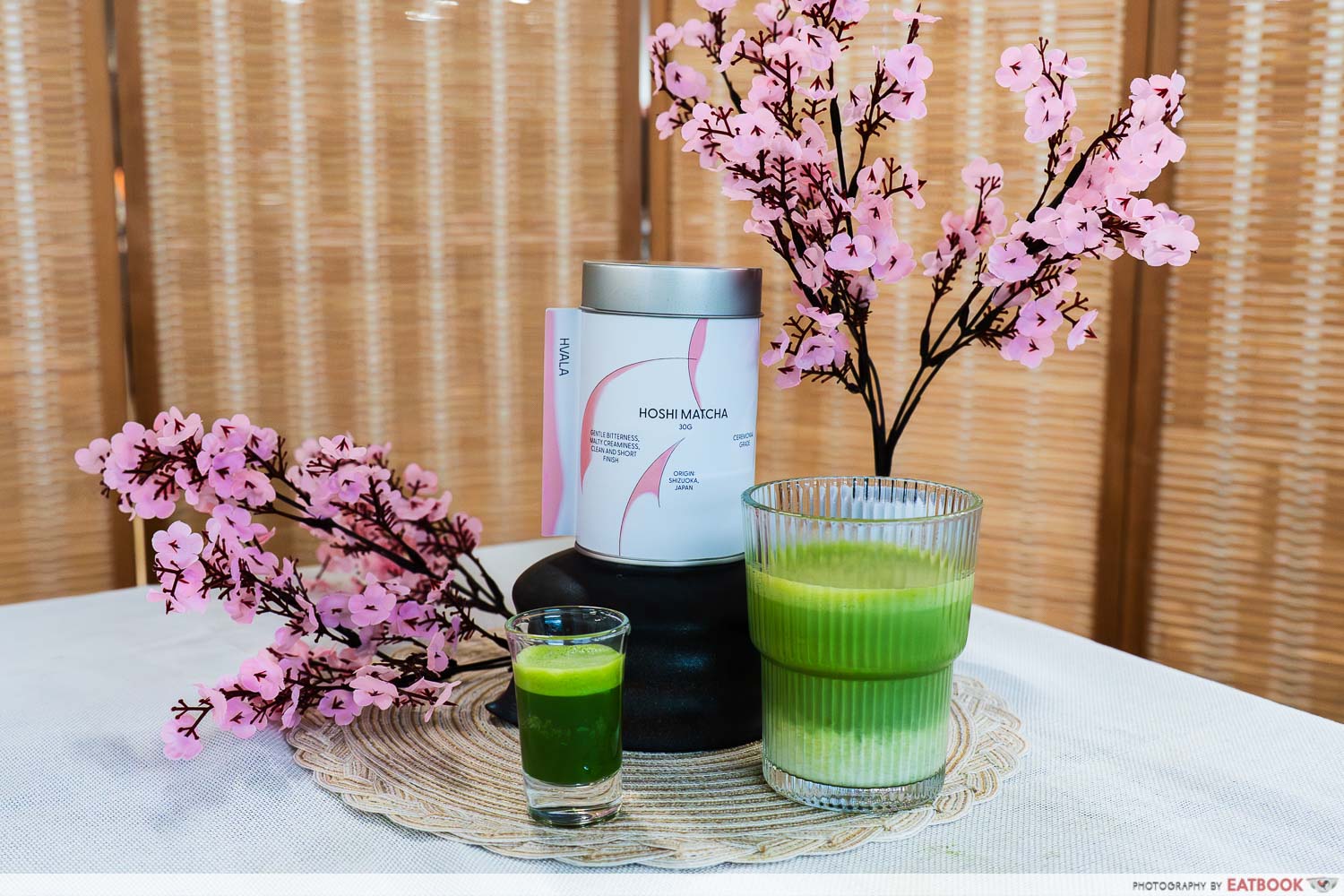
Now we’re onto the big leagues. Third place on this list goes to a name most matcha lovers will already know: Hvala. It’s a Japanese-inspired tea house brand originally founded in Singapore, and their cafes are always crowded, so if queuing isn’t your thing, I recommend buying their powder and making your own at home. For this ranked article, we got Hvala’s Hoshi Matcha, a ceremonial-grade, first-harvest matcha from Morimachi in Shizuoka Prefecture, Japan. It costs $30 for a 30g can, which works out to about $1 per gram. You can grab it in-store at their cafes or order it online.
The powder is fine, though slightly paler than Creamie Sippie’s, appearance-wise. Scent-wise, there wasn’t much going on, no strong fragrance to speak of, though we could pick up a subtle sweetness underneath. As a latte, it’s an approachable option, smooth with a subtle bitterness and finishing clean, with a low vegetal profile.
According to Hvala’s website, we were supposed to pick up notes of Horlicks from the Hoshi Matcha. While we didn’t necessarily get that distinct Horlicks-like maltiness ourselves, the creamy, mellow character did come through clearly.
Taken on its own, it was an approachable cup. It was low on astringency with a very slight bitterness, and was generally easy to drink. Altogether, this was a solid, well-rounded pick that lands comfortably in our top three.
Taste: 8/10
Value: 8/10
Appearance: 8/10
Total: 80%
Website
Hvala is not halal-certified.
2. Niko Neko
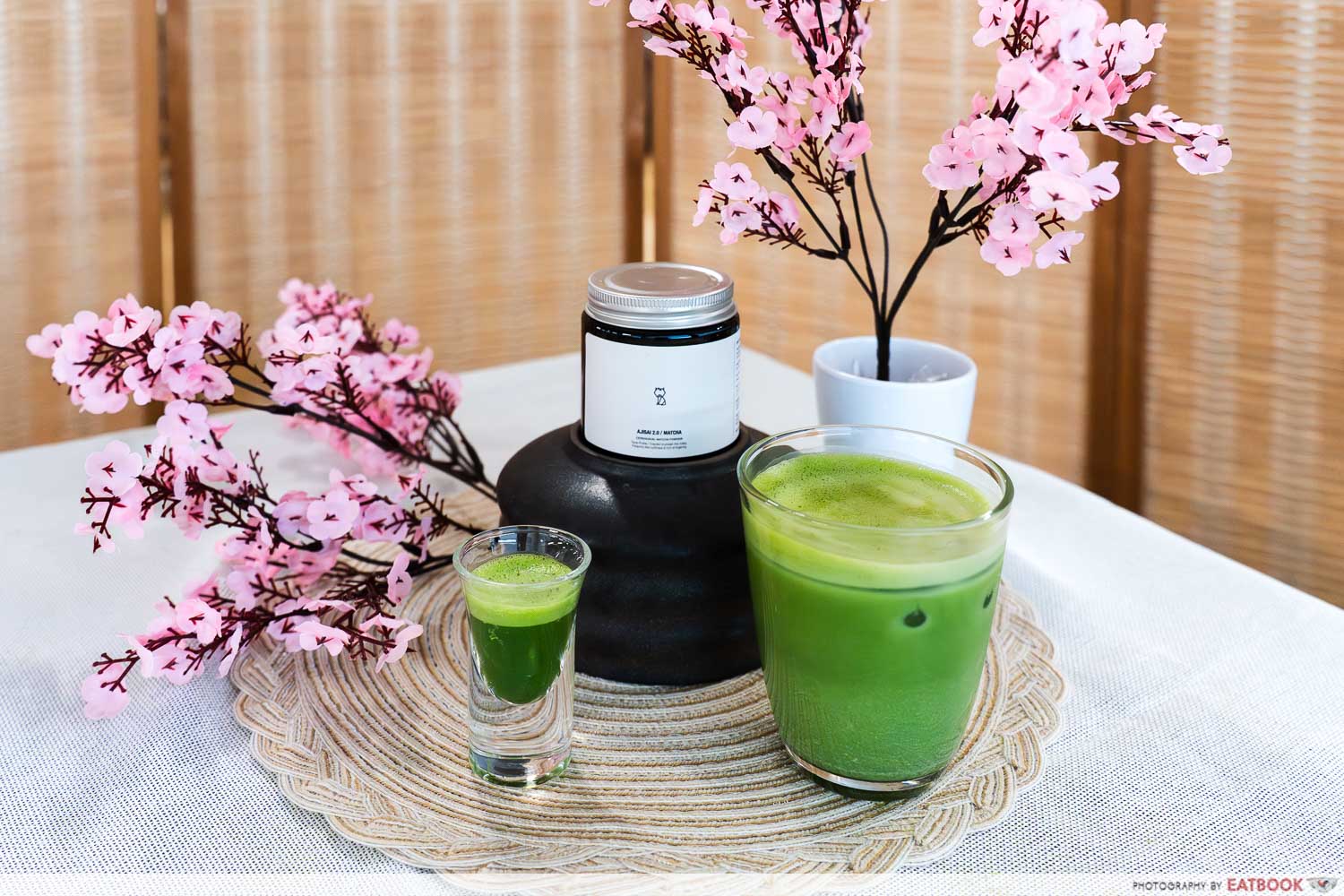
As a Malaysian, I’m proud to say that my favourite matcha powder brand actually hails from Malaysia. It’s none other than Niko Neko, a Kuala Lumpur-based matcha brand founded back in 2014, credited with pioneering the modern matcha scene in Malaysia. They haven’t opened a cafe in Singapore just yet, but you can get their products shipped over via their website. Many cafes in Singapore, including Sourdough and Brew and Hi Coffee, use Niko Neko powder for their matcha lattes.
I audibly gasped when I saw how much their ceremonial powder costs. Niko Neko’s most popular Ajisai 2.0 costs $75 per 30g, which works out to a steep $2.50 per gram—the most expensive on this list. It uses the Yabukita cultivar and comes with a full house of dietary claims: caffeine-free, cholesterol-free, gluten-free, GMO-free, and halal-certified.
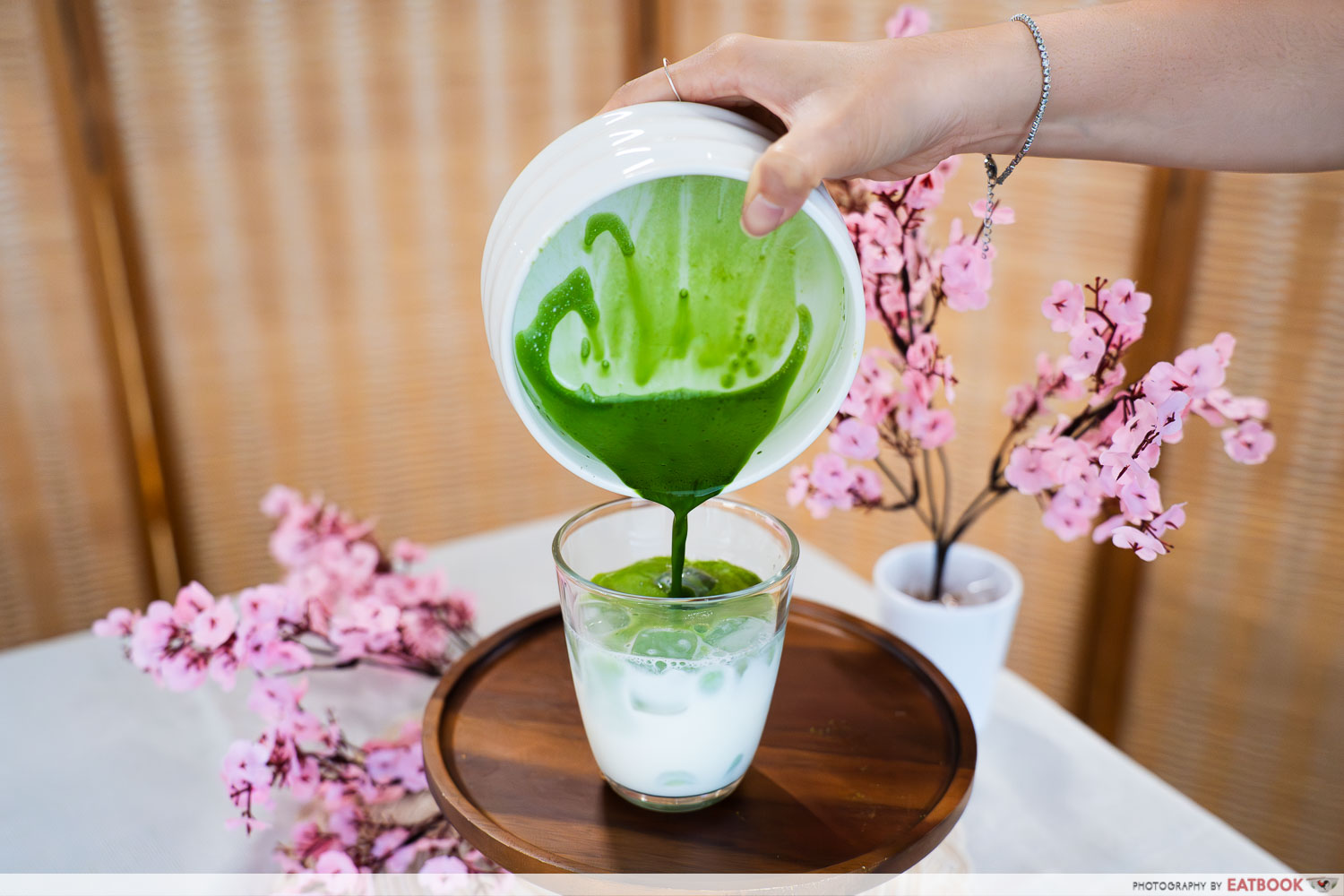
I loved how this turned out as a latte. It was perfectly balanced, with an umami, nutty flavour, owing to the roasted almond and salted peanut notes. It also had a velvety mouthfeel, with just a slight hint of bitterness that added dimension rather than turning unpleasant, cutting nicely through the creaminess. Taken as usucha, it’s noticeably bitter but still easy to drink and smooth on the palate, leaving behind a soft, lingering bitterness as the tea cools.
The powder here is the finest and most vibrant of the bunch, easily the best-looking matcha we tried, with the darkest, most saturated colour too, so plus points for that!
Taste: 9/10
Value: 6/10
Appearance: 10/10
Total: 83%
Website
Niko Neko is halal-certified.
1. Naoki Matcha
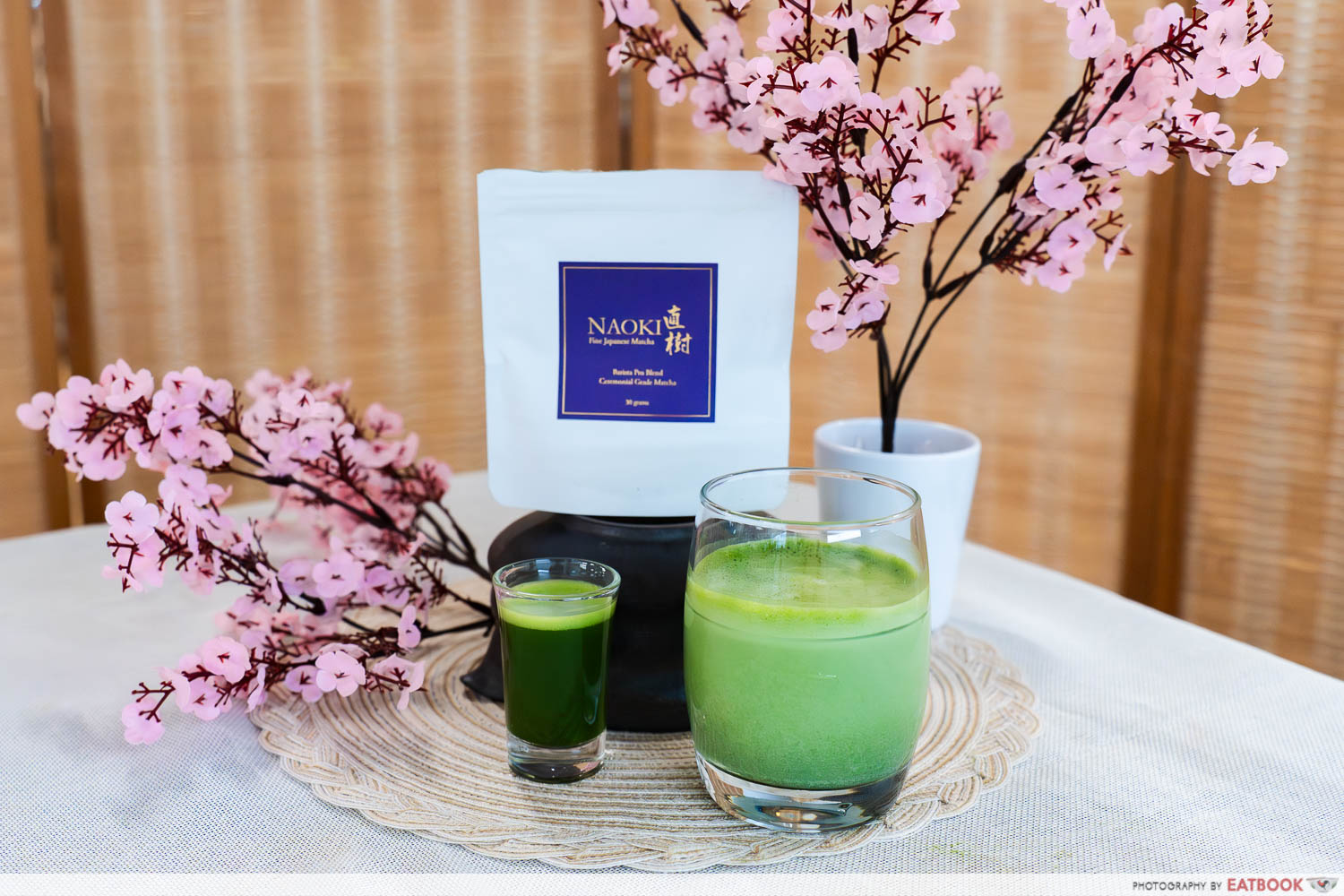
This one’s no surprise to me. I’ve been drinking Naoki Matcha for a while now, and it’s never let me down. Their Superior Blend ($20.89/30g)—which works out to about $0.70 per gram—is from Kagoshima and is made with the Okumidori cultivar. I use it mostly for lattes and desserts, and it holds up fine even with the fat in dairy or oat milk. Their matcha powder can be easily found on Shopee or TikTok Shop.
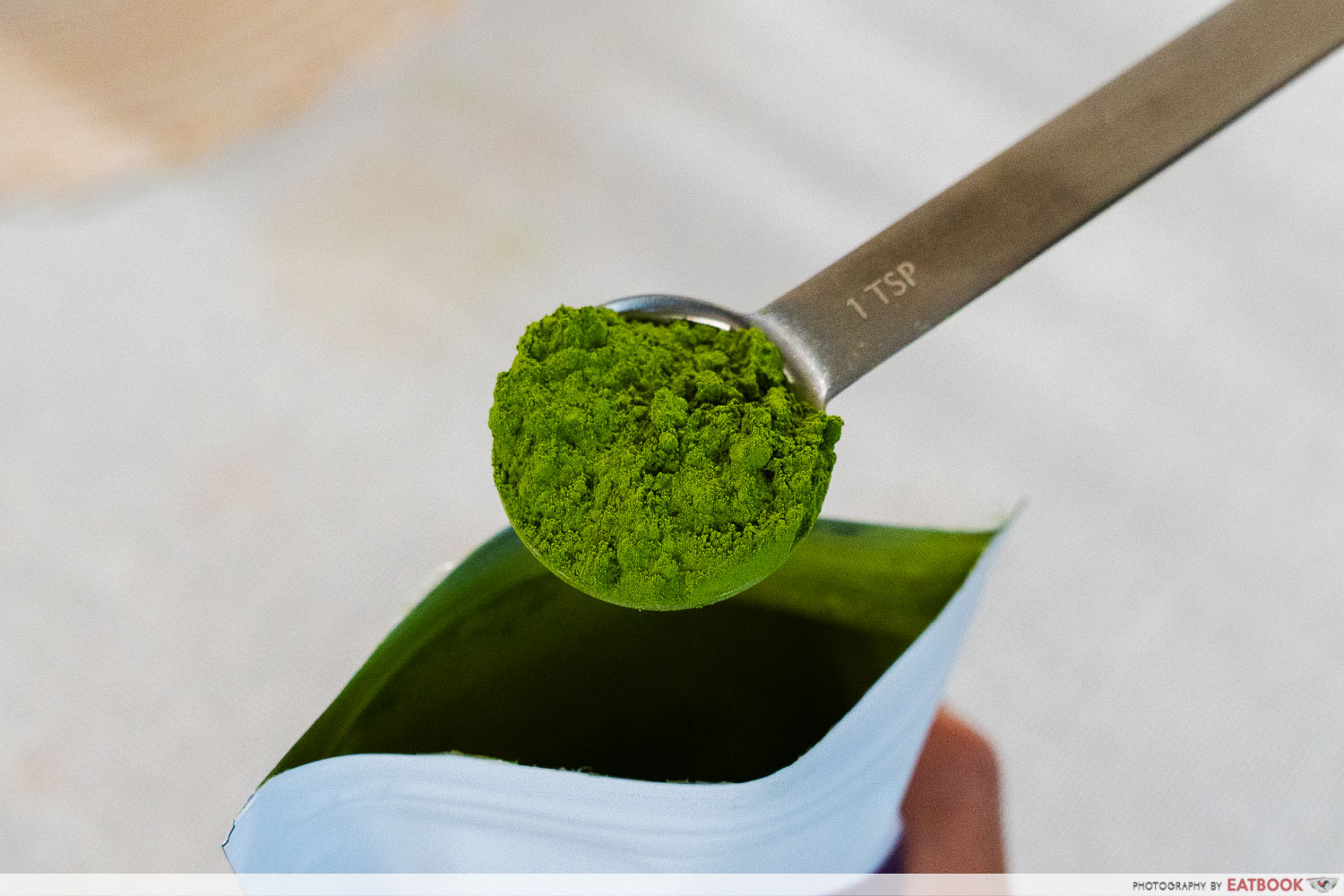
The powder’s fine, just slightly clumpier than Niko Neko’s, though I’m really nitpicking here—it’s still fine enough that I didn’t feel the need to sieve it before whisking. Out of the can, the powder smelled fresh and sweet with a seaweed-forward fragrance. As a latte, it’s smooth and balanced, heavy on the umami with fragrant floral notes. I say this with confidence: there was barely any bitterness.
Taken straight, it starts with a light bitterness and a grassy edge, but as it cools, that fades into something more floral. None of the other brands managed that shift.
Plus, at under $21 for 30g, it’s by far the cheapest option here, and paired with its stellar taste and a deep green hue that speaks for itself, Naoki Matcha is an easy winner.
Taste: 9/10
Value: 10/10
Appearance: 8/10
Total: 90%
Website
Naoki Matcha is not halal-certified.
Honourable mentions for matcha powder in Singapore
Kurasu
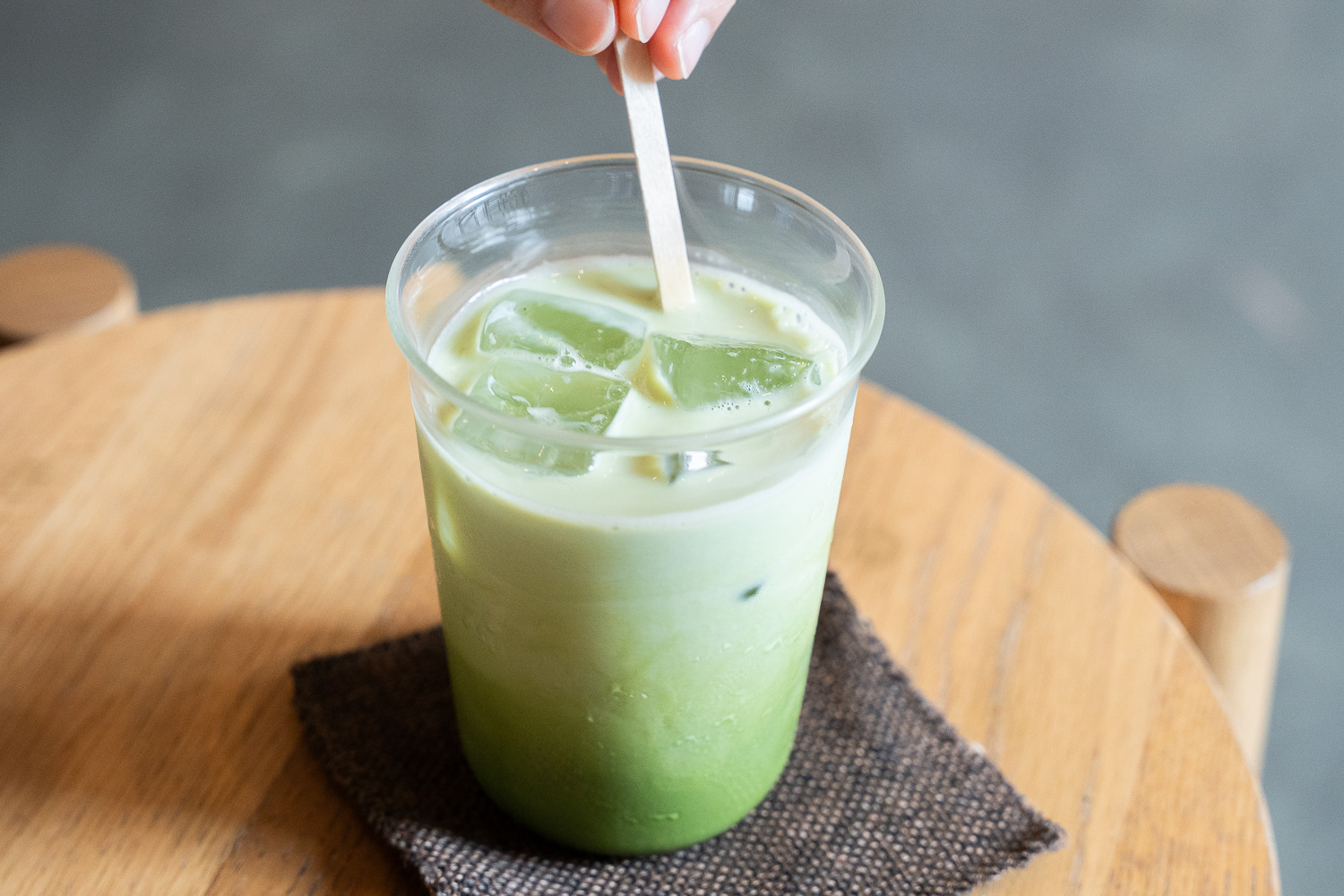
Kurasu is a Kyoto-born cafe with two outlets in Singapore. While we didn’t try their popular Matcha Kurasu Blend ($60 for 180g) specifically, we did visit their cafe at Bugis and had a cup of their matcha, which left a good enough impression that it’s worth a mention.
If you’re keen to try the blend itself, it’s farmed and picked entirely in Kyoto, featuring a rich umami core with balanced bitterness, and a smooth, low-astringency finish. It’s best enjoyed straight to get the full richness and natural sweetness, though it’s versatile enough to work in a latte too, or even as a “dirty matcha” with a shot of espresso mixed in.
Website
Kurasu is not halal-certified.
Marukyu Koyamaen
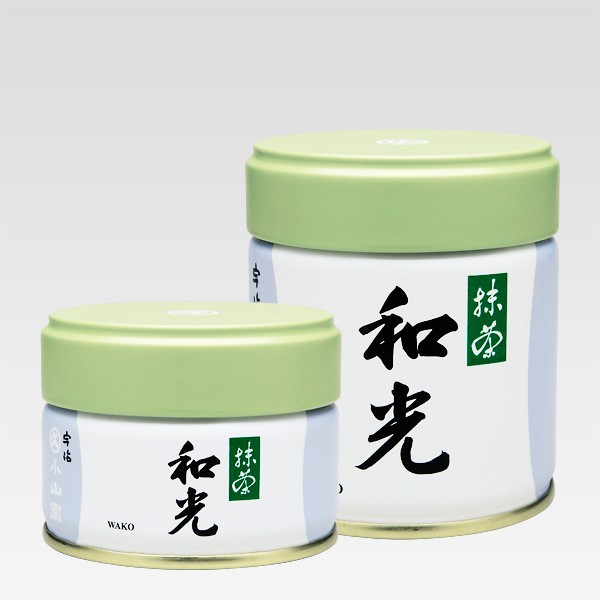 Image credit: Marukyu Koyamaen
Marukyu Koyamaen is one of Japan’s most decorated matcha producers, having won the Minister of Agriculture, Forestry and Fishery Award, Japan’s top national tea competition prize, a whopping 30 times over. If you’re not buying it directly from Japan, you can also get it locally through TeaLife, a Singapore-based online retailer specialising in Japanese tea and matcha. Their most popular offering, the Wako Matcha Powder, currently retails at $73.80 for 40g, admittedly pricey.
Fans often complement the Wako blend’s well-balanced profile, which has a distinct freshness in both aroma and aftertaste. It’s also versatile enough to be enjoyed as a traditional usucha or worked into a latte.
Website
Marukyu Koyamaen is not halal-certified.
Ippodo
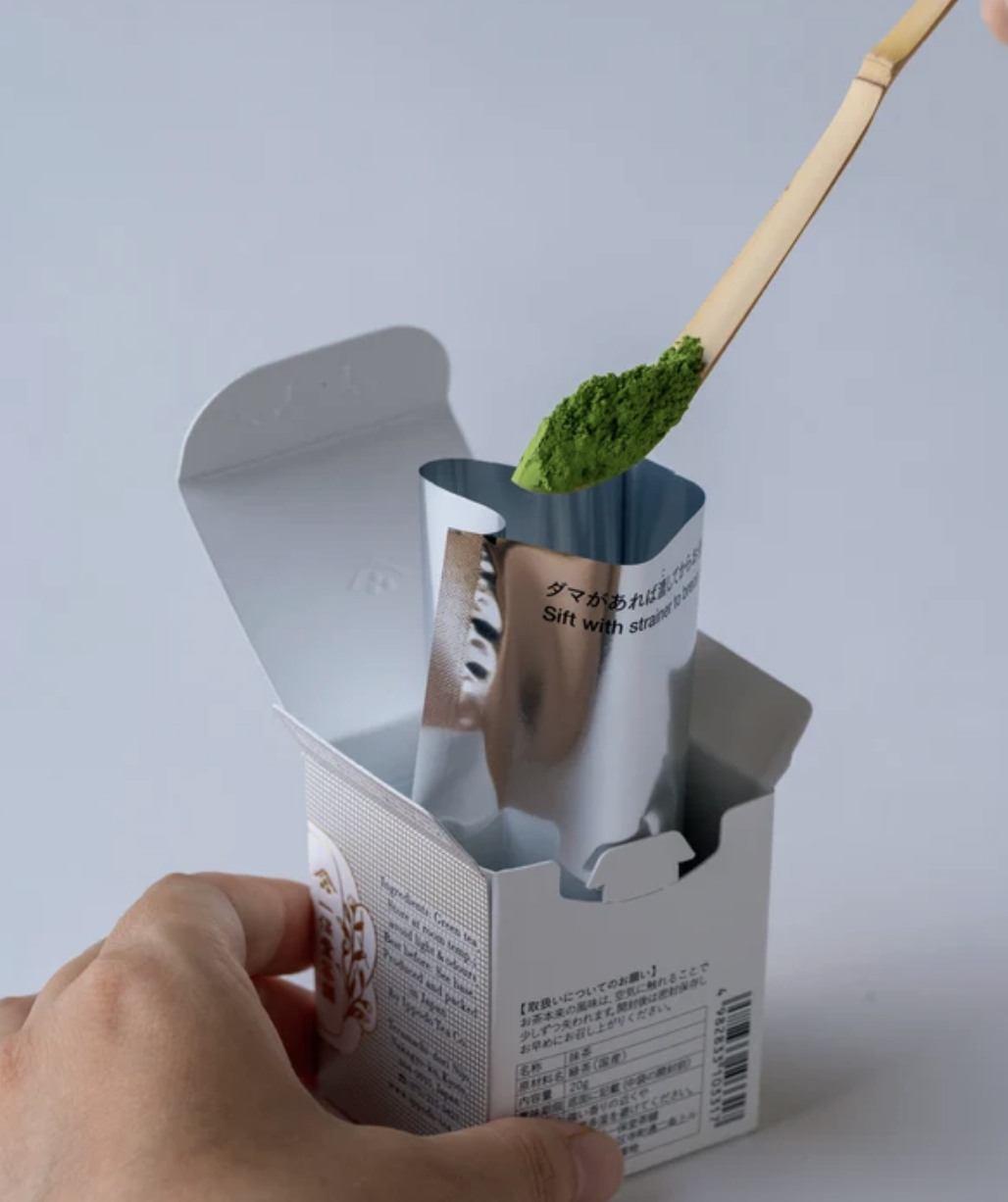 Image credit: Ippodo Global
Ippodo is a long-standing Kyoto tea house, and interestingly, doesn’t use the term “ceremonial grade” for any of its matcha. According to the brand, “ceremonial grade” is a vague marketing term created for Western markets rather than an actual classification recognised in Japan, so instead, Ippodo relies on its own internal grading system to communicate quality.
The one to get is the Ummon-no-mukashi (¥4,000/20g / ~S$37), a deep, powerful and full-bodied matcha with a rich, savoury umami profile. It’s also said to have a natural sweetness and a smooth, creamy mouthfeel, balanced by a clean, pleasant astringency in the finish.
Website
Ippodo is not halal-certified.
Ranking the best matcha powders in Singapore
Of course, what’s considered “good” matcha is ultimately subjective, and what works for your palate might not work for someone else’s. We tried to be as objective as possible, but personal preference will always play a part. That said, if you’re just starting out with matcha, we hope this gives you a solid starting point for what to buy and what to skip.
For more ranked content, check out our list of the best fish soup in Singapore and the best Wingstop flavours in Singapore.
Best Wingstop Flavours In Singapore, Ranked: We Tried Them All
Photos taken by Zi Xuan Chan.
This was an independent listicle by Eatbook.sg.

Drop us your email so you won't miss the latest news.

